The Kuhestak tragedy: An unbroken American trail of blood and broken bodies
TEHRAN — There are moments when the machinery of war strips away every pretense and leaves only the sound of a mother’s scream.
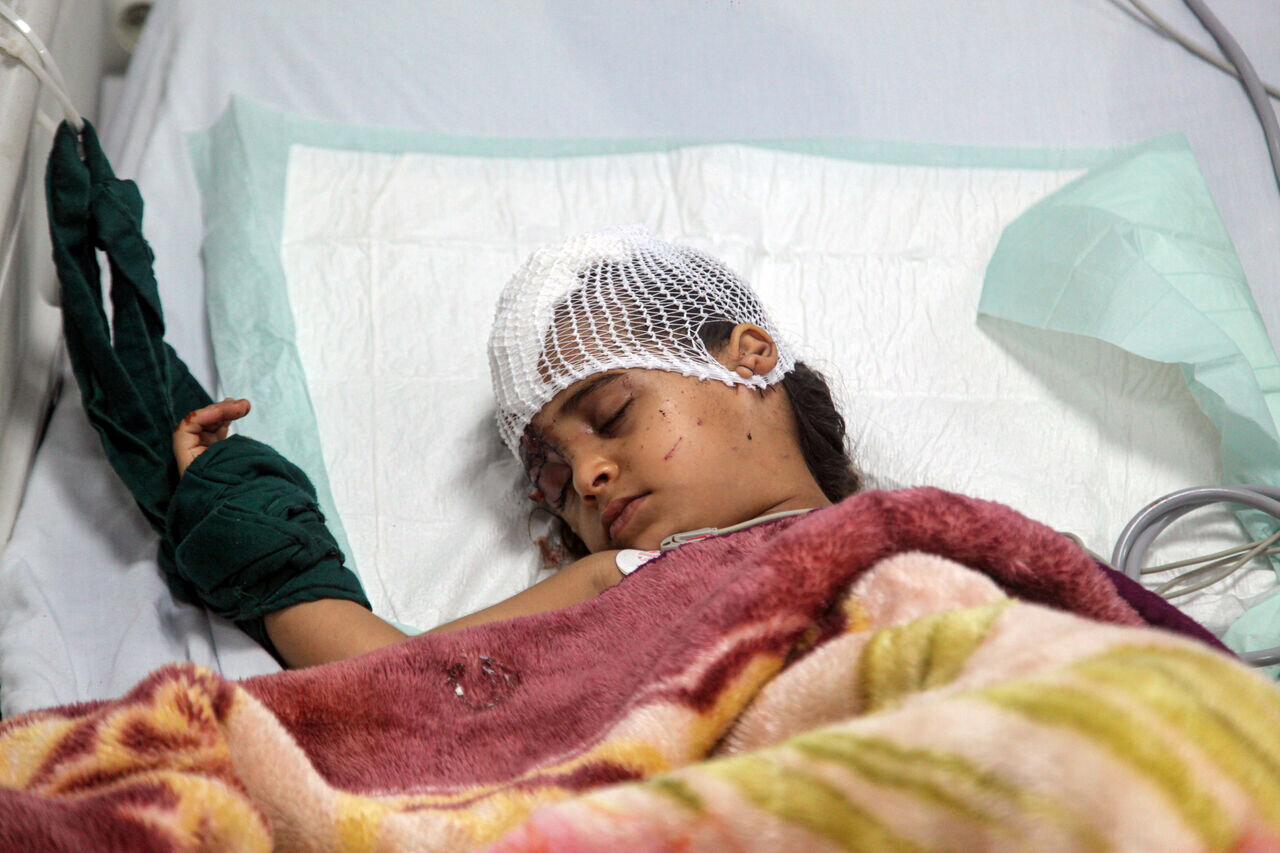
In the small coastal town of Kuhestak, on a night meant for music, henna, and the shy laughter of a bride, American munitions turned a wedding into a slaughterhouse. Guests in bright dresses and flower garlands had gathered in the home of a simple fisherman to celebrate his daughter’s marriage. Then the roof came down. Four people were torn apart. More than sixty others were left bleeding, many of them children. Among the dead was a four-year-old boy whose small body had to be carried to the grave while his family still heard the music that had been playing only moments before.
This was not an isolated “battlefield incident.” It is the latest entry in a continuous ledger of civilian flesh paid by Iranian, Lebanese, and Palestinian families under American fire. The same Washington that now speaks of “precision” is the same aggressor that reduced the Shajareh Tayyebeh elementary school in Minab to a mass grave on February 28. There, scores of children, most of them young girls sitting at their desks, were buried under concrete and steel. Teachers who stayed to protect them died with them. Parents who ran toward the school never came home. Amnesty International has concluded that U.S. forces were very likely responsible. Human Rights Watch has demanded an investigation as a potential war crime. UNESCO called it a grave violation of international law. The dead numbered in the hundreds of children whose only crime was attending school.
CENTCOM answers in the cold language of military bureaucracy: American forces do not target civilians; precision-guided weapons strike military objectives. Precision describes the path of a missile. It does not erase the blood on a child’s school uniform or the shattered henna on a bride’s hands. Under international humanitarian law, distinction, proportionality, and precaution are not optional. A classroom full of little girls is not a military formation. A wedding courtyard filled with families is not a lawful target simply because someone in Washington decided it was.
The pattern is familiar and sickening. In Gaza and Lebanon, the same explanations are recycled: mistakes were made, civilians were not the intended target, investigations are ongoing. Yet the investigations never produce accountability. The word “mistake” becomes a shield. Victims become statistics. Responsibility dissolves into press releases while parents dig through rubble for pieces of their children.
This is the deeper rot. The International Criminal Court, the International Court of Justice, and the United Nations Security Council fall silent when the accused holds a permanent veto. The principle of distinction does not pause for American passports. The prohibition on disproportionate attacks contains no exception for U.S. national security. When justice depends on the identity of the perpetrator, it ceases to be justice at all.
Every child crushed in Minab, every guest blown apart in Kuhestak, becomes another permanent wound in Iran’s memory. Decades of sanctions, pressure, and targeted killings have not produced surrender; they have produced deeper rage and longer memory. Governments across the Persian Gulf watch closely. If Washington is willing to accept this scale of civilian carnage as the cost of its objectives, the value of its security guarantees collapses.
Kuhestak is not merely another strike. It is a test of whether civilian life still carries any weight in the eyes of the current American decision-makers. CENTCOM’s talk of precision cannot answer the only questions that matter: What intelligence justified turning a wedding into a kill zone? What precautions were taken to confirm a military objective existed inside a house full of celebrating families? Will an independent investigation ever be allowed to examine the evidence without political interference?
Repeating that civilians were not the intended target is not enough. Intent matters, but so do the nature of the target, the precautions taken, and the foreseeable civilian harm. The bombs that destroyed a wedding in Kuhestak must not also destroy the principle that civilian life remains protected in war.
The most devastating silence is not the silence of the rubble. It is the silence of the institutions created to speak when such acts occur. International law cannot remain credible if it keeps quiet. The International Criminal Court (ICC) cannot claim universal jurisdiction if accountability is selective. The United Nations cannot defend a rules-based order while its own machinery repeatedly fails when a permanent member is implicated.
If the strike on Kuhestak was an unlawful attack on civilians, an independent investigation is the minimum demand of justice, not a political favor. If it was lawful, the evidence must withstand open scrutiny. If it was not, those responsible must face consequences.
The dead of Minab and Kuhestak do not need another statement of regret. They need names, evidence, and accountability.
Iran will never forget the classrooms of Minab or the blood-soaked wedding in Kuhestak. The bombs have stopped. The silence of international law has not. When the aggressor can walk away from the bodies of children and wedding guests without consequence, the international community must feel abandoned.
Leave a Comment